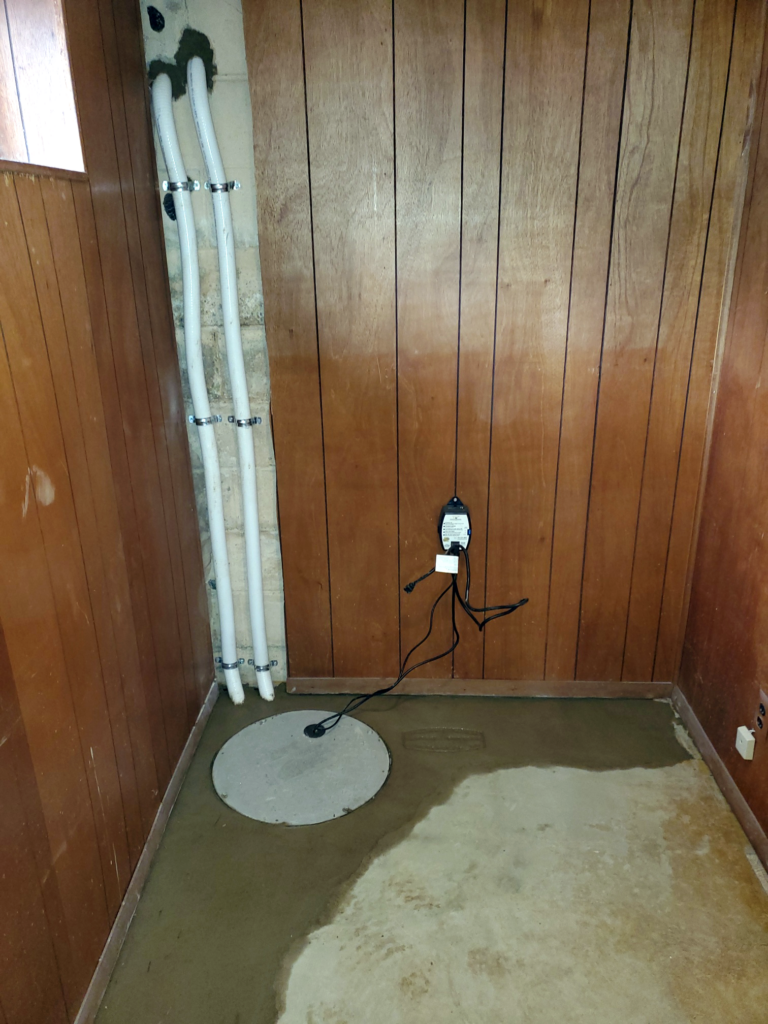
One of the most common solutions for basement waterproofing is the installation of a drain tile system with a sump pump. This can greatly reduce the risk of water damage, yet it is important to note that having two discharge pipes is far better than relying on one.
A discharge pipe moves water from the sump pump out of the house. If only one discharge pipe is installed, excess water can overload the pipe, causing it to clog or even burst. Using two discharge pipes and a backup pump helps distribute the water evenly, reducing pressure on the pipe.
In colder temperatures, water in the discharge pipe can freeze, causing a blockage and preventing water from flowing out of the house; not to mention the possibility of the pipe bursting. Having two pumps and discharge pipes can mitigate this risk by ensuring water keeps flowing even if one pipe has frozen.
Our Dual Discharge SystemSM provides a second pipe for a backup pump system to ensure a dry basement even if you experience primary sump pump failure, one of those once-every-hundred-years storms or a frozen drainage pipe.
Additionally, our Seamless Discharge SystemSM is a one-piece drainage pipe that extends from the sump basket to the outside of your home in a continuous run. There are no seams that might break and, in the case of freezing, the pipe expands instead of cracking.
Contact Standard Water right away if you have questions or would like a free consultation.
Frequently Asked Questions
Why would a house have two sump pumps?
A house may have two sump pumps to provide backup if the primary pump fails or cannot keep up with incoming water. A second pump can operate during heavy rain, a pump failure, or when the primary pump is overwhelmed. In a dual-pump system, having separate discharge pipes can also provide additional protection if one discharge line becomes blocked or frozen.
Can two sump pumps use the same discharge pipe?
Two sump pumps can sometimes be connected to a shared discharge system, but separate discharge pipes provide an important layer of redundancy. If a shared discharge line becomes blocked or freezes, both pumps can be affected. A dedicated discharge pipe for the backup pump allows it to continue moving water if the primary discharge line has a problem.
What happens if a sump pump discharge pipe freezes?
If a sump pump discharge pipe freezes, water may be unable to leave the house, potentially causing the sump pit to fill and the pump to run continuously. A second sump pump with its own discharge pipe provides another path for moving water when the primary discharge line is frozen or blocked. Proper discharge-system design can also help reduce the risk of freezing-related problems.