Signs of Foundation Damage
Foundation damage tends to show up in pieces, and the early signs are easy to write off as the house aging or the weather. Some appear on the foundation itself. Others turn up in rooms with no obvious connection to the basement, which is part of why they get missed. The list below covers what to look for in both places, and any one of them is reason enough to have the foundation checked.
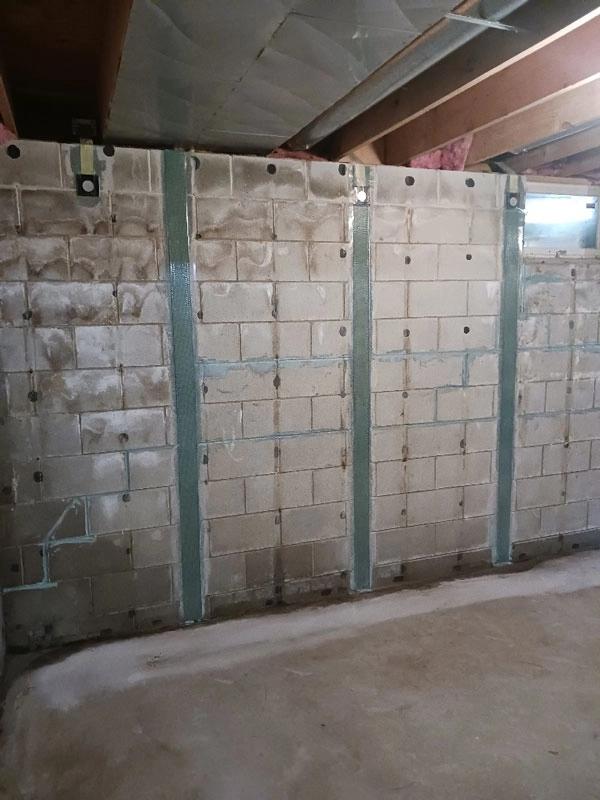
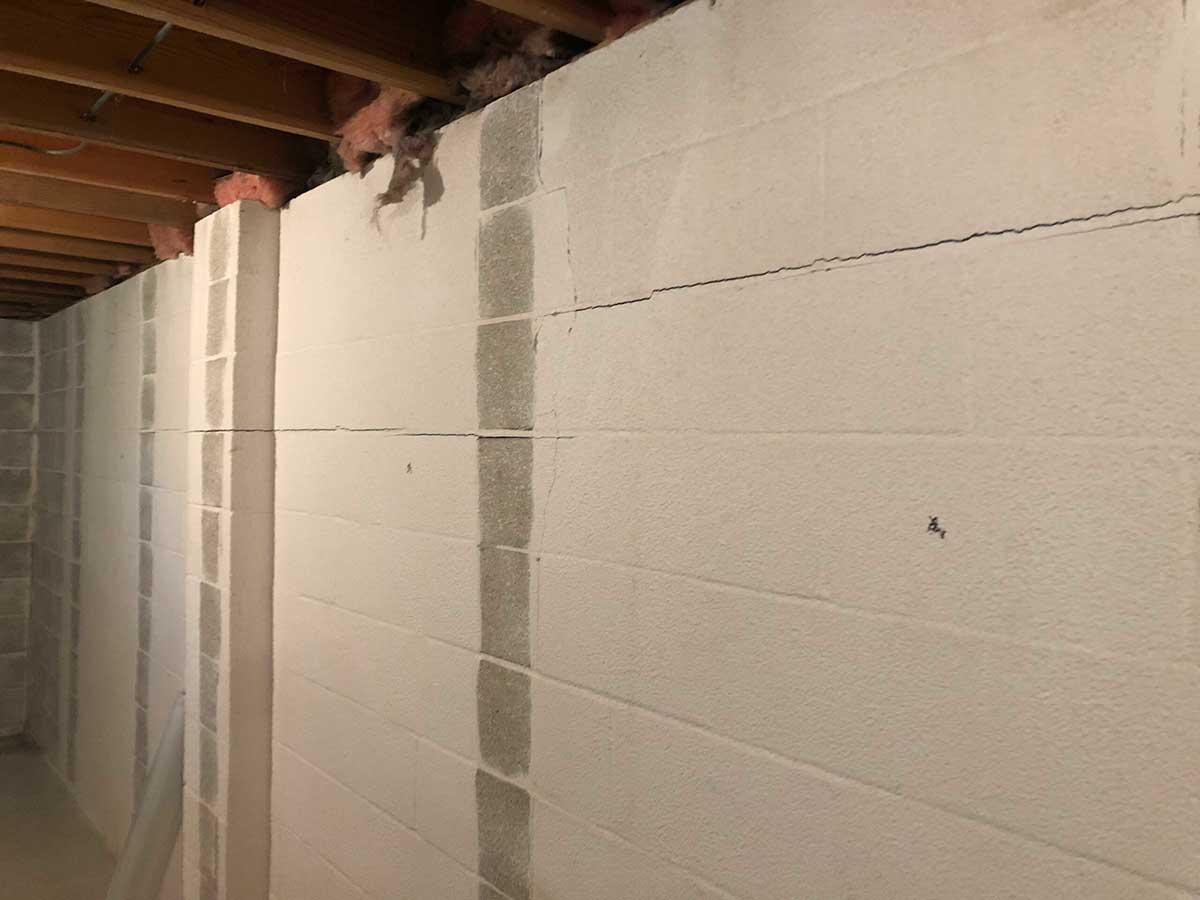
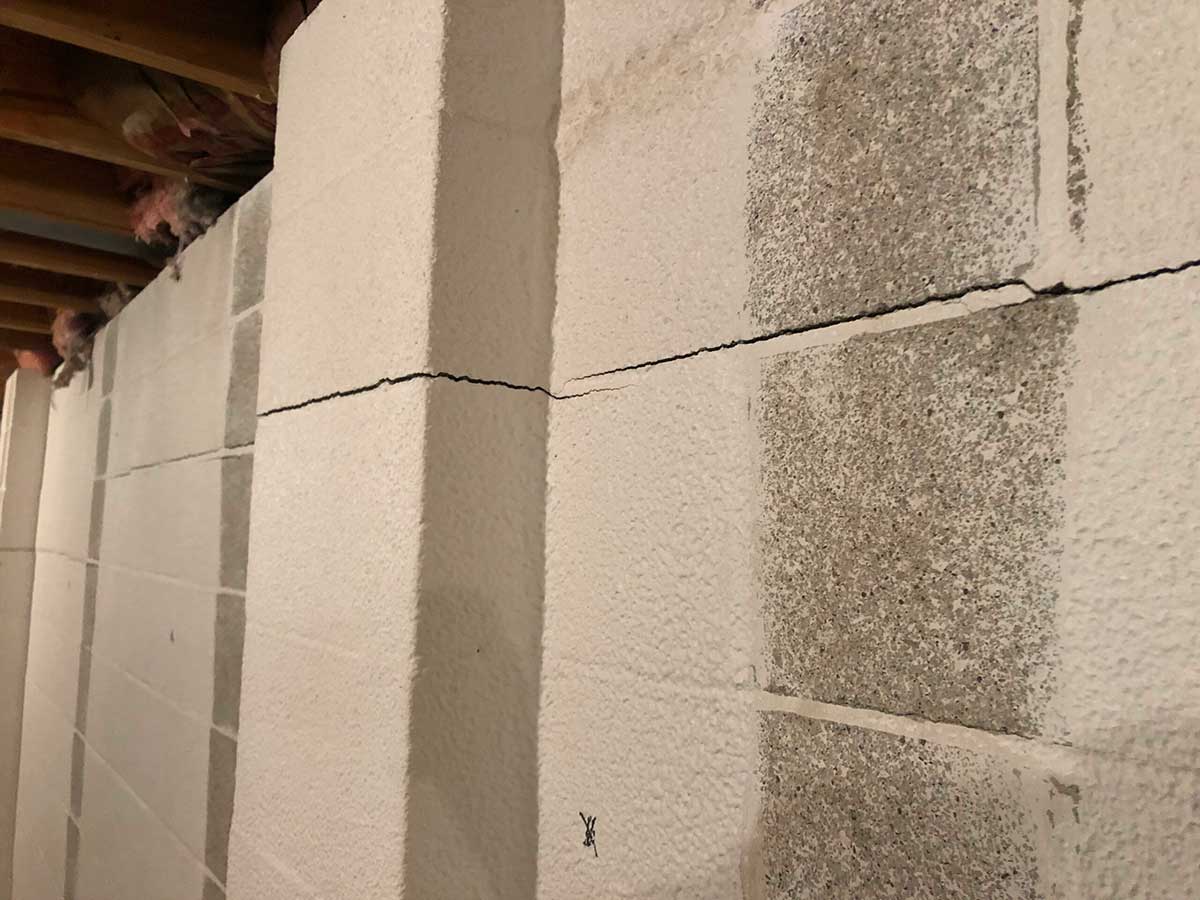
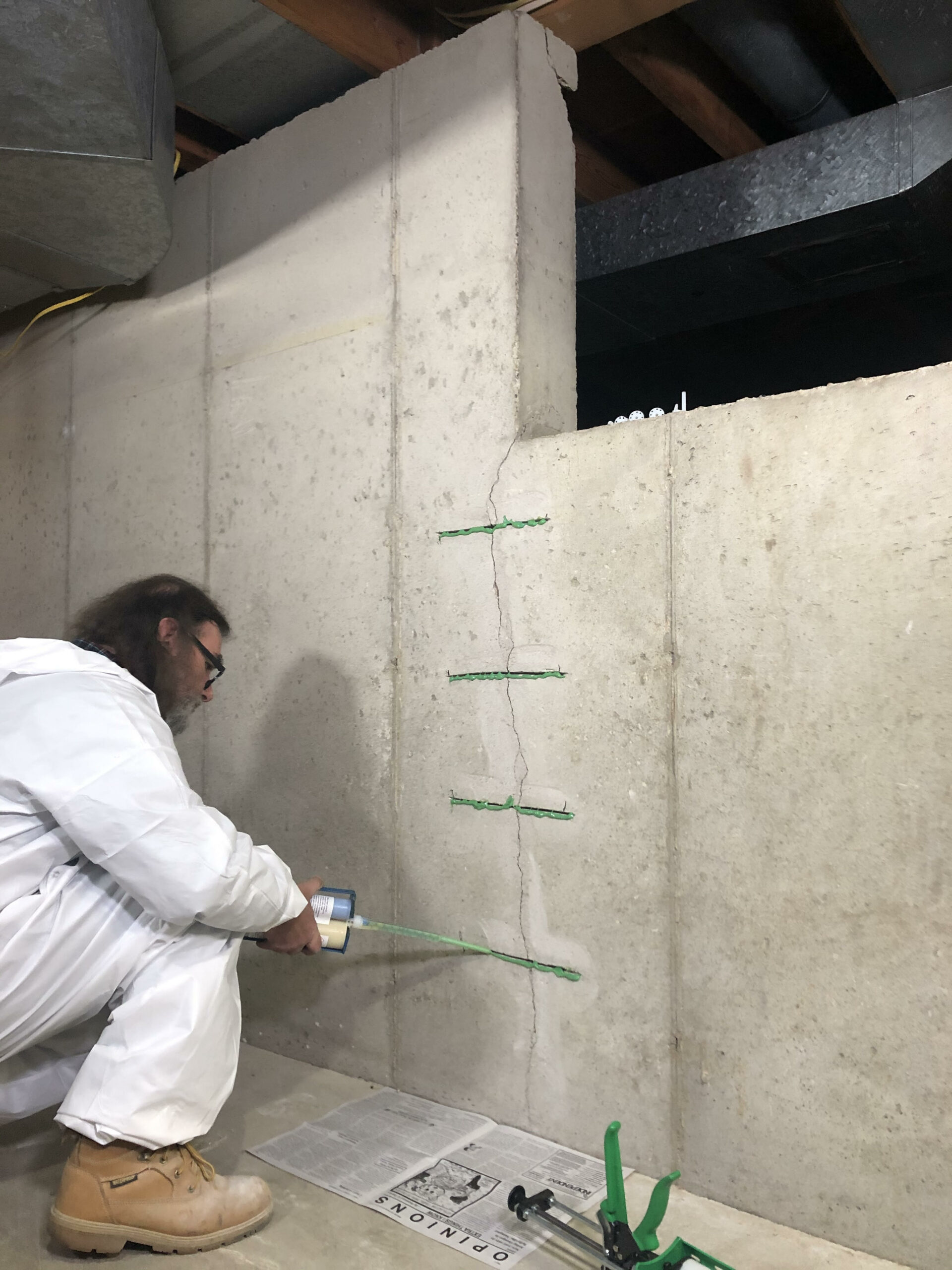
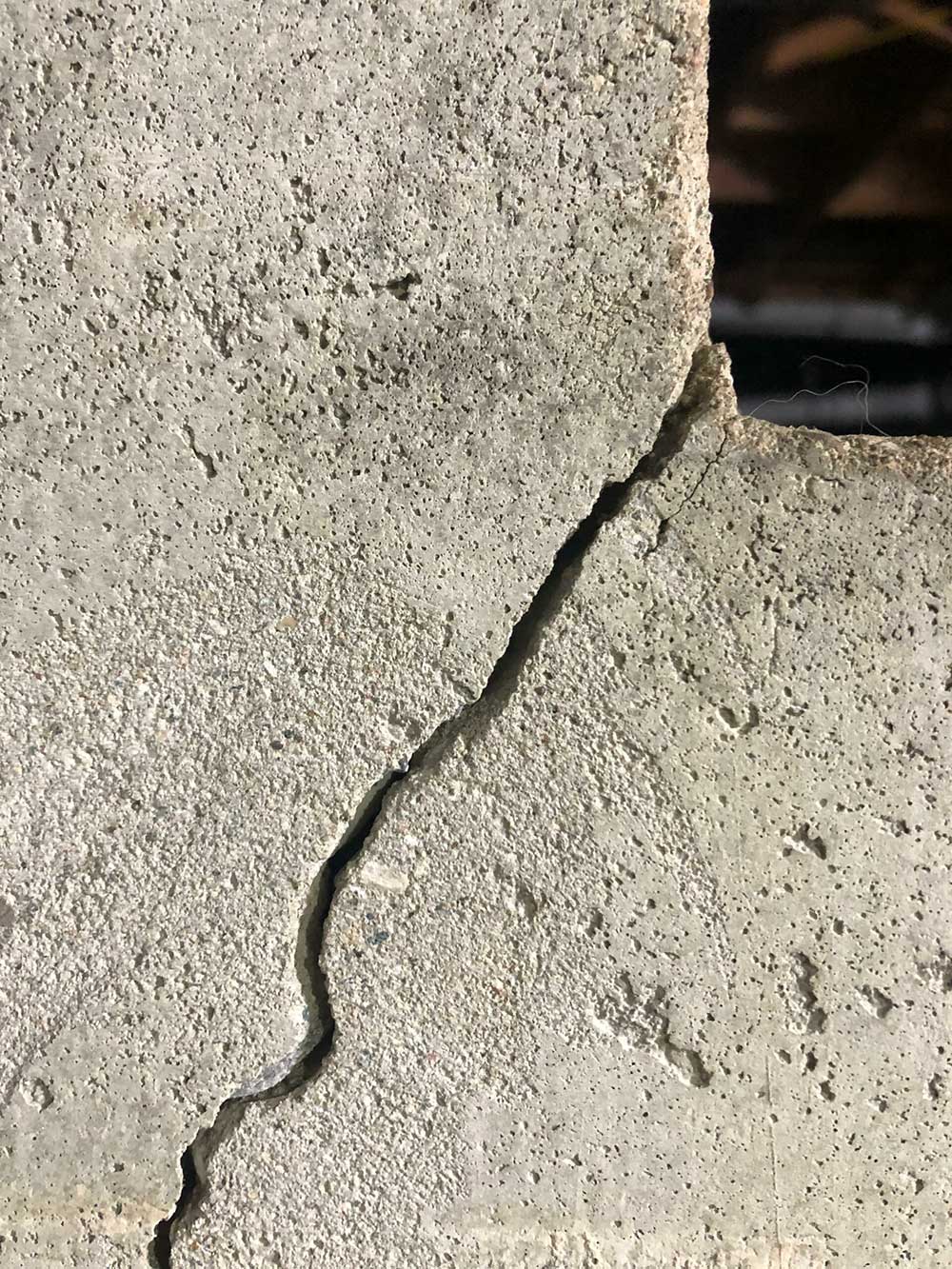
Cracks in the basement walls. These can run straight across the wall, climb in a stair-step pattern through block or brick, or run up and down a poured wall. Thin ones are easy to ignore, but cracks that are widening, lengthening, or letting water in after a heavy rain are the ones to take seriously.
A wall that bows or leans inward. A basement wall that is no longer flat, bulging toward the middle or tipping in at the top, is taking on more pressure than it was built to handle. You can sometimes spot it by standing at one end and looking down the length of the wall.
Doors and windows that stick or won’t latch. A door that used to close cleanly but now drags, sticks, or won’t latch is often a sign the frame around it has shifted out of square. Windows that suddenly stick or won’t lock can point to the same movement.
Sloping or uneven floors. Floors that tilt toward one side of a room, bounce, or feel uneven underfoot usually trace back to movement below. A ball or marble that rolls on its own across a floor that looks level is a common giveaway.
Gaps opening at walls, ceilings, and trim. Look for a gap widening between the top of a wall and the ceiling, baseboard or crown molding separating from the surface it was fastened to, or daylight showing around a door or window frame. When pieces that were installed flush start pulling apart, the structure behind them has shifted.
Cracks in the drywall. Cracks that show up above doorways and windows, or run at an angle from the corners of the frames, are often the first thing noticed upstairs, well before anyone thinks to check the basement.
Water coming into the basement. Cracks that weep or leak during heavy rain or snowmelt are letting in moisture that wears the foundation down over time. Standing water, damp spots, or a chalky white residue on the walls all point to a foundation that is no longer keeping water out.
Cracks and movement on the outside. Cracks in exterior brick or masonry, or a chimney that is leaning or pulling away from the house, mean the movement has gone far enough to show on the outside of the home.
The more of these you are seeing, and the faster they are changing, the more the foundation needs attention. A free inspection from Standard Water pinpoints what is causing the signs and what the repair will involve.